You have already played a few board games when a friend suggests trying a deck-building game. You recognise the term, but you are not entirely sure what to expect. Is it simply another card game, or does building the deck change how the whole experience works?
Deck-building games offer a particular kind of progression: the cards you choose now change the hands you will draw later. Over the course of a session, a weak starting deck can develop into something faster, more specialised, and capable of combinations that did not exist at the beginning.
This article explains what deck-building is, why the mechanism feels so satisfying, how it differs from deck construction and engine-building, and what designers should watch for when using it.
What Defines a Deck-Building Game?
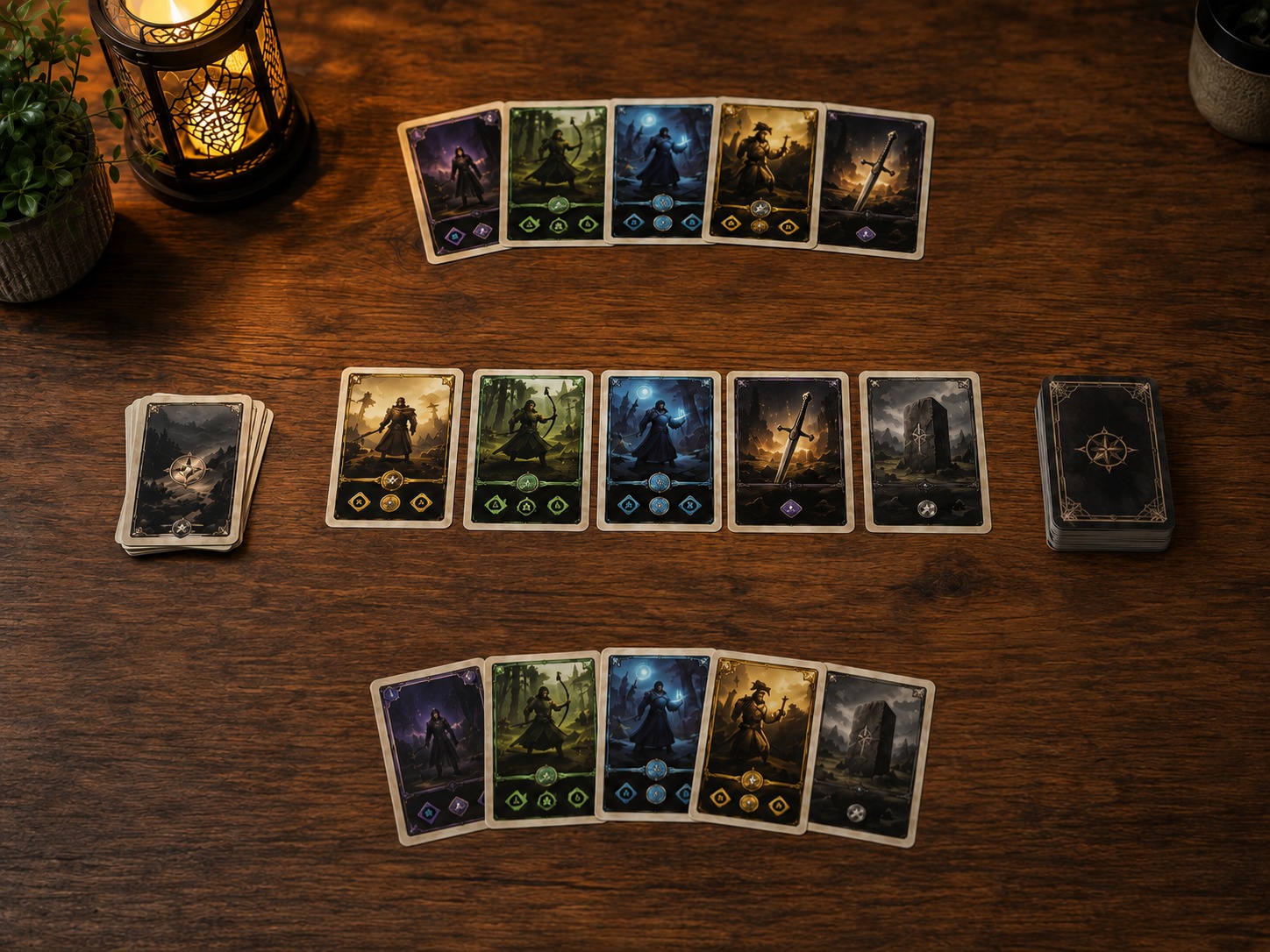
A deck-building game is not simply a game that uses cards. Its defining feature is that players construct and improve their personal decks during the game itself.
They usually begin with a small set of basic cards and gradually add new abilities, resources, actions, or characters. Acquired cards return in later hands, so every addition changes what the player may be able to do in future turns.
Some games also allow weaker cards to be removed, making the deck more focused and consistent.
Deck-building happens during the game. The deck itself becomes part of the player’s progression.
Technically, deck-building is a mechanism rather than a genre. But because it can shape so much of a game’s structure and identity, players commonly talk about “deck-builders” as a recognisable category.
The Basic Loop: Draw, Use, Improve
Most deck-building games repeat a simple cycle:
- Draw cards from your current deck.
- Use them to generate resources, actions, attacks, movement, or other effects.
- Acquire cards that improve or specialise the deck.
- Cycle through the deck until those new cards return in later hands.
Each cycle changes the possibilities available to the player. But adding a powerful card does not automatically improve the deck: every new card also affects how often the existing ones will appear.
A strong deck is not simply a collection of strong cards. Its parts need to work together.
Why Building a Deck Feels So Satisfying
Deck-building creates an unusually visible form of progression. Players begin with limited possibilities, then gradually watch their own decisions transform what future turns can achieve.
The deck becomes personal. Even when players begin with similar cards, different purchases can push them towards attacks, card draw, movement, resources, or particular combinations.
Every purchase creates anticipation. A newly acquired card often provides no immediate reward. Instead, the player waits to see when it returns and what else will appear in the same hand.
Combinations make earlier decisions visible. Effects that seemed modest separately can suddenly reinforce one another. The satisfying moment is not only becoming stronger, but recognising: I built this.
Deck-Building, Deck Construction, and Engine-Building
These terms describe related ideas, but the key difference is when and how the player creates the system they use.
Deck-building means developing the deck during the game. In Dominion, for example, newly acquired cards gradually change what future hands can do.
Deck construction means preparing the deck before play begins, as in Magic: The Gathering or the Pokémon Trading Card Game. Strategy begins with deciding what the deck should contain before the match starts.
Deck construction happens before the game. Deck-building happens during it.
Engine-building means creating a system that makes future actions more productive or efficient. Improvements often remain permanently available rather than repeatedly cycling through a shuffled deck.
Deck-building and engine-building often overlap, but the terms are not interchangeable. A deck can develop into an engine when its cards increasingly reinforce one another or make future turns more effective, while many engine-building games achieve the same kind of progression without using a deck at all. Not every deck-builder needs to focus on engine-building either: some place more emphasis on deck efficiency, timing, tactical card use, or adapting to a changing market.
Deck-Building Can Be the Game or Support the Game
In some designs, building the deck is the central strategic puzzle. Dominion is the clearest example. Most important decisions concern which cards should enter the deck, how they interact, and how efficiently the deck cycles.
In other games, the deck improves another activity. It may determine how effectively a character fights, moves, explores, manages workers, or performs actions elsewhere on the board.
The Witcher: Old World, for example, uses deck-building to develop combat options while the broader game also involves travel, exploration, and character development.
Both approaches can work. What matters is that the role of deck-building is clear and meaningful within the wider experience.
Common Weaknesses and Design Risks
Deck-building creates satisfying progression, but the same structure also introduces several recurring problems.
Deck Bloat
Every new card competes for space in future hands. Buying an average card can therefore make a deck less consistent rather than stronger.
Knowing when not to buy is part of the strategy, while designers need to ensure players can recognise which additions actually support their deck.
Market Randomness
A changing market encourages adaptation, but becomes frustrating when no useful direction is available or when a particularly strong card appears just before one player can buy it.
Randomness should change the plan, not remove the possibility of having one.
Slow Combinations
Purchased cards need time to cycle back into the player’s hand. That delay creates anticipation, but becomes disappointing when combinations arrive too late to matter.
Draw, discard, search, and removal effects all influence how much control players have over that timing.
Runaway Leaders
Deck-building naturally creates positive feedback: stronger decks create stronger turns, which may make further improvement easier.
If that advantage compounds too quickly, the final result can begin to feel inevitable long before the game ends.
What Designers Should Watch for
A deck-builder needs more than interesting cards. The key question is whether every part of the system helps players shape a deck with a recognisable purpose.
- Give the deck a job. Players should understand what improving it allows them to do better.
- Create relationships, not just stronger cards. Interesting purchases depend on what the player already owns, what may appear later, and which direction they are developing.
- Control the pace of improvement. Players need enough time to feel their deck change before the game ends.
- Preserve meaningful alternatives. A market is more interesting when several purchases can support different plans rather than one card being no-brainer purchase.
- Prototype small. A basic starting deck and limited card pool are enough to test whether the loop works before creating dozens of cards.
Players should not merely collect better cards. They should feel that they are shaping better future turns.
If you are still working out how to move from an idea to something testable, our guide How to Design a Board Game: What Every Beginner Should Know explains where prototyping fits into the wider design process.
Conclusion: You Are Building Your Future Turns
The appeal of deck-building lies in the connection between an earlier decision and a later hand. A card chosen several rounds ago may suddenly complete a combination, open a new strategy, or reveal how far the deck has developed.
Whether deck-building forms the entire game or supports something larger, its strongest moments arrive when players recognise that the deck in front of them is the result of decisions they made themselves.
Want to Go Deeper?
Understanding deck-building as a mechanism is one thing. Turning an idea into a system that creates meaningful decisions, develops at the right pace, and survives real playtests is another.
Board Game Design Fundamentals: A Step-By-Step Guide takes you through the wider design process, from defining the experience and building your first prototype to playtesting, iteration, and preparing the game for further development.